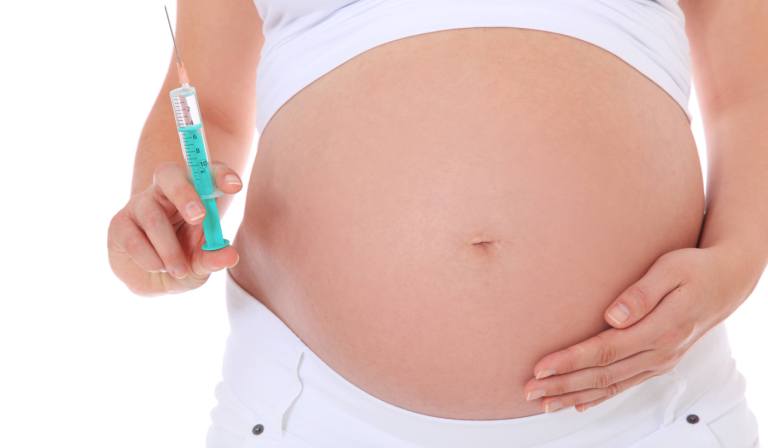

At Paras Bliss you have the opportunity to ensure that you care for your bundle of joy, the entire lifetime. With the latest technology, technical experts and collaboration, Paras Bliss advices you on Cord Cell Banking- A noble way to ensure that your child has access to the best in time of need. We also counsel you on the need, use, requirement, suitability and cost of cord cell preservation. It is recommended for families that have a history of cancer, blood disorder, immune deficiencies and anemia.
The Cord Cells – collected post the delivery from the umbilical cord- have special cells called Stem Cells that are responsible for the foundation of the body. In case your baby in the future suffers from a life threatening illness, the stem cells can be used for cure. The stem cells have the quality of turning into any type of cell in the body – brain, liver, muscle, etc. They can also replicate or copy themselves limitlessly and can repair and regenerate the functions in the body. Stem Cells can hence be regarded as the panacea and elixir of life.
Make an AppointmentAt Paras Bliss, we help you in deciding how you wish to secure the future of your young ones. We have a team of counselors to explain you to process of preservation, storage and later use. The advent of technology and medical research has been responsible for many success stories in stem cell treatment. The advantages of Cord Cell Preservation are:

I am very impressed with all the facilities given by the hospital. All the doctors, nursing staff and housekeeping is also good. I would recommend this to my other family members.


Your hospital is very nice and doctors are careful. Sisters are very punctual and treat patients as in family atmosphere. I am very much satisfied with the services of this hospital.
Attendants are very nice and polite. Overall great experience. Thanks for the care.

My Overall experience is nice in Paras. Good Ambience and good treatment. Yes! I will recommend Paras
Outstanding services and hospitality. Dr Manoj Sharma has given a very good medical reference and treatment . We are very satisfied with overall performance.
Doctors and staff are very cooperative and helpful.
Overall I am pleased with the services. Appreciate the efforts and dedication of overall staff. Would like to highlight certain names below for their exceptional services towards the patient, relatives and the infant.

The pregnant body goes through a number of changes during pregnancy. The changing hormones and the body changes also start to affect the skin. However an expecting mother can retain her supple clear skin by following good ante natal guidance. When you start experiencing any changes in the skin, don’t get alarmed and hassled. Talk to the doctor to discuss the same.
Conditions in Pregnancy that can cause Skin Problems:
The Remedy to Retain a Clear Skin:
You can resort to good moisturization of your body as soon as pregnancy is diagnosed. It includes using coconut or olive oil or any other good moisturizer (SPF 15 or more in sun) liberally on towel dried skin after a bath. It will increase the suppleness of the body and prevent stretch marks.
Always consult your doctor if any new skin condition e.g. eruptions, blisters, redness, itching develops, as it can be harmful for you and your baby. Itching over body though very innocuous can be dangerous.
Is Pregnancy Glow a Reality?
For many the same is a reality and for some it is medical fact. As a lot of water is retained in body in pregnancy, the skin is well hydrated and all flaws disappear. The hormones cause your blood volume to increase and give a pink radiance to your face. You can also feel warm and flushed which is normal and due to pregnancy. You have to keep yourself well hydrated and exercise which will actually help to ease out abnormal water retention.
However for every mother no amount of marks or bodily changes equals to the bliss that your bundle of joy will give to you.
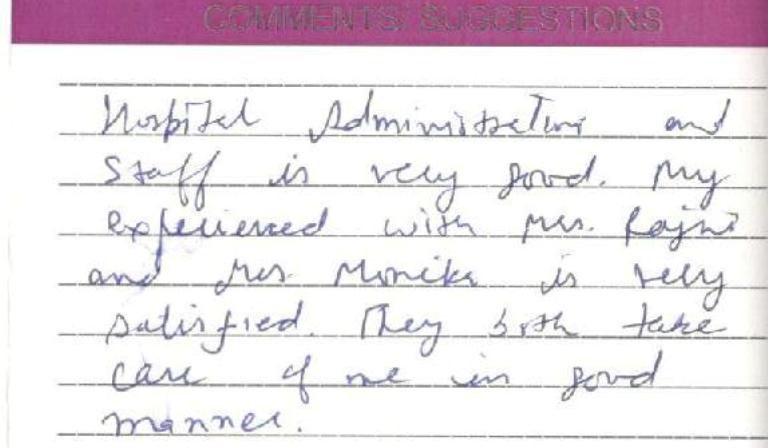
Hospital administrator and staff is very good. My experienced with Miss Rajni and Ms. Monica is very satisfied. They both take care of me in good manner.
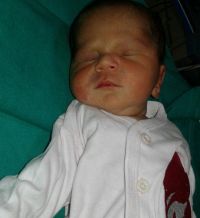
Nurses and staff is very co-operative and adjustable and caring. Doctors are very caring and concerned and track patients with all smiles. Overall experience is awesome and very good.
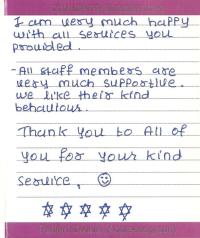
I am very much happy with all services you provided. All staff members are very much supportive. We like their kind behaviour. Thank you to all of you for your kind service.
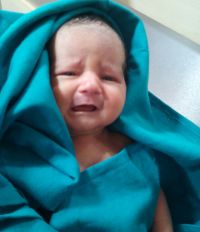
Just wanna say, big thanks to each and everyone, doctors and their staff. Brought my baby here in a worse condition, but they made us feel so comfortable and such a polite behavior. Treated the kid, like their own child. Thanks each and everyone.
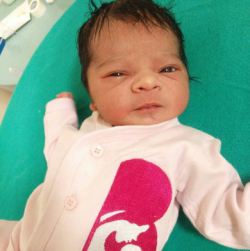
Over all experience in the hospital before, during and after delivery was great. Staff has cooperated very well. Right from nurses to housekeeping behaviour was great and they treated the mother and child like family. Last but not least infact above all “hat’s off to Dr. Shilva” and special thanks to Dr. Krishan and all doctors involved in the process.
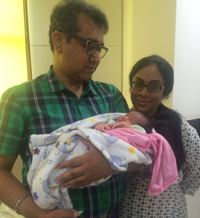
Dear Team Paras Bliss, We don’t have words to express our gratitude but thanks a ton for making one of the most precious moments of our lives so beautiful and memorable.
-Lots of love, Dr. Awnindra, Dr Beena and Omisha”
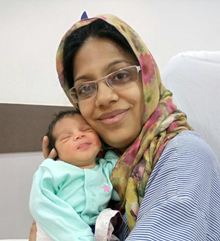
Dear Team Paras Bliss, Thank you for a blissful experience. God Bless.
-Inderjeet, Gaganpreet and Ranbir”
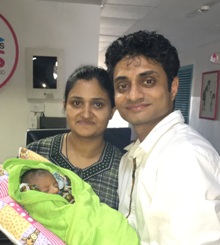
Thanks to Paras Bliss, Panchkula for giving us excellent services. Special Thanks to Dr. Shilva for special care and personal focus. At last Thanks to all nurses staff, housekeeping, canteen services persons and all who were involved directly or indirectly to support us.
Neat and clean hospital with satisfactory treatment for my patient and baby. I really appreciate team of doctors, anesthetists, support teams and other related people for tackling critical case of my wife. Highly recommended if you are looking for better and high quality services for your baby and wife.
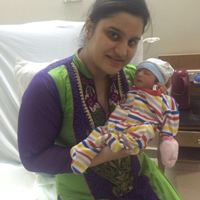
Experience with everyone in the hospital was awesome. I want to convey my best wishes and thanks to everyone involved (Staff), for making it a lifetime experience. Having a baby itself is an experience for life but, the kind of support and care I got from hospital was exceptional!
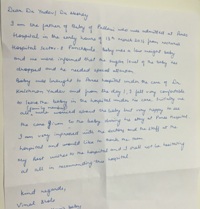
My baby was a low weight & needed special attention so baby was brought to Paras Bliss Hospital under the care of Dr. Krishan Yadav and from the day I felt comfortable to leave the baby in hospital under his care. Initially my family members worried about the baby but very happy to see the care given to baby during his stay at Paras Bliss Hospital.
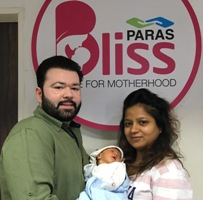
Hospital is clean and staff behaviour is excellent. Nursing staff is highly cooperative. Doctors , Hospital Facilities in the hospital are exceptional.
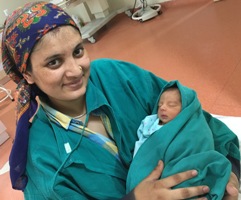
Facilities in the hospital are really good. The hospital had excellent cleanliness. We are grateful to the doctors and staff for the constant support and information given to us time to time. This hospital has fulfilled our expectations to the fullest.
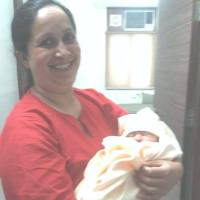
“We are really happy with the care we have received. It was just a home away from home.”
Thank you PARAS for such an exceptional experience and genuine care!
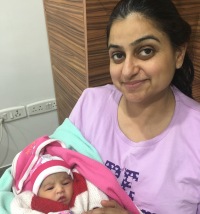
I came here in an emergency. The hospital staff was quiet helpful. All the nurses especially Ms. Ritu, (OT nurse) helped me to settle down. Everything went fine. I am totally satisfied by the services. Glad I choose Paras Bliss. Thanks for the help and support.
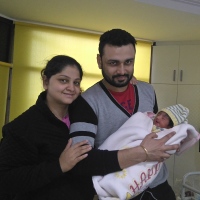
We were fortunate to have our baby delivered at Paras Bliss, New Delhi. The entire process was seamless and we met with thorough professionals, who tend to us with utmost warmth and care. The staff went out of the way to make our stay comfortable. The staff was methodical in the approach and I wish them good luck for future.
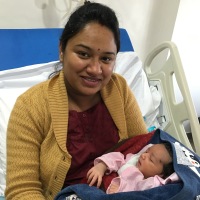
Really nice & favourable environment in this wonderful institute. The best guidance was provided to me by the labour room staff. The training given during the antenatal class also proved to be of great help. Thanks to all.
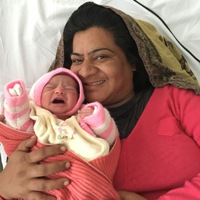
My experience with Paras Bliss is fabulous. Everything is so perfect and excellent. The entire staff is so supportive. Doctors are really excellent here. I would like to recommend Paras Bliss to everyone.
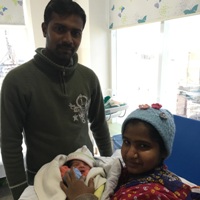
Paras Bliss made my journey of motherhood a joyful. I appreciate the care and concern showed by doctors and nurses. I really treasure the overall services that are provided by hospital that has made my experience wonderful.
We like the facility given by the Paras Bliss Hospital and I like all the staff so much but one of the best staff member who was very supporting and very hard working as per my point of view is Vandana as she is very caring lady.
Attendants are very nice and polite. Overall great experience. Thanks for the care.
Doctors and staff are very cooperative and helpful
Outstanding services and hospitality. Dr Manoj Sharma has given a very good medical reference and treatment . We are very satisfied with overall performance.
My Overall experience is nice in Paras. Good Ambiance and good treatment. Yes! I will recommend Paras.
Stem cells, from a newborn’s umbilical cord are collected immediately after birth. Once the umbilical cord has been clamped and cut, the remaining blood in the umbilical cord is drawn into a collection bag. The remaining tissue portion is collected in vials. Whether you have a normal delivery or a c-section, the process of collecting your newborn baby’s stem cells is a safe, painless procedure that won’t disrupt you or your baby. From start to finish, the cord cell collection process takes about five minutes.
Umbilical cord stem cells when preserved through the process of cryopreservation. Cryopreservation freezes the cells at a temperature of -196 degree Celsius, through liquid nitrogen. This way the cells’ age freezes but do not lose their viability. The cryo- freezed cells would be in their purest form at the time of use, as they do not undergo the factors of pollution, ageing or any other kind of damage, thus making them more powerful and better programmable than the adult stem cells present in the body, for a better treatment. Therefore, the stem cells preserved under cryogenic conditions have no expiration date, and can be utilized at any moment, lifetime.
Umbilical cord blood stem cells are used in the treatment of over 80 medical conditions. Among these are leukemia, aplastic anemia, thalassemia, Hodgkin’s disease, and non- Hodgkin’s lymphoma. There are many more therapies under clinical trials that are changing the landscape of future medicines. Cord blood stem cells are being researched upon for the treatment of conditions such as Autism, traumatic brain injury, congenital heart defects, hearing loss and cerebral palsy. Over 30 clinical trials around the world are researching the capability of the cord tissue stem cells in treating, Stroke, Spinal cord injury, Liver disease, Diabetes and Cartilage injury.
Cord Cell preservation has become pocket friendly now, compared to the early phase when this technology was launched, owing to the presence of several Stem Cell Preservation banks in the country. Each stem cell bank has its own cost package, depending upon the facilities they provide. Most of the stem cell banks have come up with installment and EMI schemes to suit the pockets of their clients, better.
Stem cells are present everywhere in the body. The most common sources are Bone Marrow, Peripheral Blood, and many more, but, the extraction of stem cells from these sources is a painful process, while Umbilical cord stem cells can be collected through a simple, non-invasive process at the time of birth, without any harm to the mother or the baby. The preserved stem cells can be easily retrieved at any time. During transplants, cord blood stem cells pose lower risk of rejection. These are naïve cells and offer higher matching ability than stem cells from other sources. These cells can be a potential match for the child’s siblings also. Cord tissue stem cells have greater regenerative capabilities compared to adult stem cells.
Cord cell banking is the process of collecting and storing your baby’s umbilical cord stem cells for potential future medical use. Umbilical cord has two components, the cord blood and the cord tissue. Cord blood banking involves collecting blood left in your newborn’s umbilical cord and placenta, which contains potentially lifesaving cells called hematopoietic stem cells (HSCs). Cord tissue banking involves collecting the clamped cord tissues, after the cord blood has been drawn out from it. Umbilical cord tissue is an abundant source of mesenchymal stem cells (MSCs), which pose a critical role in the treatment of diseases, for their regenerative properties in cartilage, muscle, and nerve cells.